AI 被焊进战争机器|Rewire 新闻晚报
AI 被焊进战争机器|Rewire 新闻晚报
On March 24–25, 2026, multiple reports said the U.S. delivered a 15-point ceasefire framework to Iran via Pakistani intermediaries, while Tehran’s reaction signaled a familiar frustration: this reads less like a negotiation and more like a unilateral checklist. At the same time, the U.S. defense establishment is accelerating the operational adoption of generative AI inside military systems and networks—a shift that changes not only battlefields, but also global finance, sanctions enforcement, and the threat model for crypto users. (See: AP coverage of the 15-point proposal and market reaction and AP coverage on AI tools entering Pentagon networks.)
This post focuses on what matters for the blockchain industry: stablecoins as geopolitical plumbing, sanctions as protocol-layer risk, and AI-driven security threats that are already reshaping crypto crime and self-custody best practices.
1) Diplomacy as a checklist: why markets twitch, why stablecoins quietly dominate
When ceasefire headlines hit, markets often do the obvious thing first: oil down, risk-on assets up. But in 2026’s Middle East environment, the relief rally can be extremely fragile because the core constraint is structural—shipping lanes, infrastructure security, and the credibility of enforcement mechanisms.
AP reporting around the ceasefire proposal described oil whipsawing: Brent crude had surged during the conflict, then traded below $100 amid shifting expectations and rejection signals. (AP market wrap, AP on stocks and oil amid ceasefire hints.)
Where crypto comes in
In 2025–2026, stablecoins are no longer just “exchange chips.” They’re increasingly used as:
- Cross-border settlement rails
- Dollar access instruments in stressed economies
- Liquidity bridges when banks tighten risk controls during geopolitical stress
The IMF has documented strong stablecoin usage dynamics in emerging-market contexts, including parts of the Middle East, as crypto rails expand beyond speculation. (IMF working paper on stablecoin usage patterns.)
At the same time, regulators and central banks are increasingly explicit that large-scale private stablecoin usage can challenge financial stability and monetary sovereignty. The BIS has been particularly direct on this point. (BIS press release and Annual Economic Report 2025 themes.)
Crypto takeaway: In a geopolitical shock, stablecoins can be both the fastest rail and the most scrutinized rail. Treat them as infrastructure with policy risk, not just “cash on-chain.”
2) “AI inside the war machine” also means AI inside the information war
When a defense organization brings more AI into operational workflows, two things tend to rise together:
- Automation and speed in decision cycles
- Attack surface and ambiguity in the information environment
Recent reporting described the Pentagon expanding internal access to generative AI tools. (AP report on AI tools operating inside Pentagon networks.) Meanwhile, the Department of Defense has also published frameworks to guide “responsible” AI adoption, acknowledging risk, oversight needs, and governance. (DoD Responsible AI Strategy & Implementation Pathway PDF.)
The crypto-security implication: AI scales fraud, not just productivity
AI doesn’t need to “hack cryptography” to break crypto users. It only needs to hack humans—at scale.
Common 2025–2026 patterns (now amplified by generative AI) include:
- Deepfake “executive” voice calls that pressure urgent transfers
- Hyper-personalized phishing using leaked KYC data
- Fake support chats and fake wallet “security upgrades”
- Malicious QR codes and address poisoning that defeats casual verification
Chainalysis’ ongoing crypto crime research has repeatedly highlighted the growing role of scalable fraud and sanctions-driven flows in the on-chain threat landscape. (Chainalysis: crypto sanctions and 2025 trends.)
Crypto takeaway: In an AI-saturated environment, the weakest link is often the signing moment—the instant a user approves a transaction they didn’t fully verify.
3) Sanctions become product risk: what every crypto team (and user) must internalize
Geopolitics doesn’t just move prices—it moves permissioning. In practice, that means:
- More addresses/entities get sanctioned
- Compliance expectations expand (even for “neutral” infrastructure)
- Exchanges, bridges, OTC desks, and payment providers tighten filters
- Stablecoin issuers may freeze funds tied to flagged activity
In the U.S. context, OFAC has published explicit, industry-specific guidance for virtual currency actors. Even if you’re not a U.S. company, counterparties often are—and the downstream risk travels. (OFAC: Sanctions Compliance Guidance for the Virtual Currency Industry.)
Globally, the FATF continues to push implementation of standards for virtual assets and service providers, including expectations aligned with the “Travel Rule” approach. (FATF targeted update on implementation of VA/VASP standards.)
Practical consequences for everyday users
Even if you’re doing nothing wrong, geopolitical escalation can create collateral friction:
- Withdrawals delayed due to enhanced screening
- Counterparty refusing certain source-of-funds histories
- Stablecoin transfer reversals/freeze risk for flagged flows
- Sudden “risk-off” behavior from centralized platforms
Crypto takeaway: Self-custody is not about evading rules—it’s about maintaining operational continuity when intermediaries are forced to change behavior overnight.
4) What to do now: a 2026 self-custody checklist for an AI + sanctions world
Below is a practical checklist aimed at long-term holders, active on-chain users, and teams managing treasury or contributor payments.
A. Harden the signing workflow (this is where AI attacks concentrate)
- Use a hardware wallet for primary funds; keep private keys offline.
- Treat every signature as a legal authorization, not a click-through.
- For large transfers: verify recipient addresses using out-of-band confirmation (not the same device/app that displayed the request).
B. Separate “spending” from “savings”
- Keep a smaller hot wallet for daily use.
- Keep long-term holdings in a cold setup with stricter procedures.
C. Assume comms are compromised
- Don’t trust “urgent” DMs, even from familiar accounts.
- For teams: require two-person approval and a second communication channel for high-value transfers.
D. Keep compliance reality in mind (especially for businesses)
- Document transaction rationale for treasury flows.
- Monitor counterparties and exposure to high-risk jurisdictions.
- If you operate a service: align internal controls with the expectations laid out in OFAC and FATF materials.
5) 2025–2026 industry context: tokenization grows, but trust still bottlenecks at custody
A major theme in 2025 was the expansion of tokenization narratives—real-world assets, on-chain settlement experiments, and more institutional presence. But none of that matters if end users can’t safely hold and move assets under pressure.
The paradox of this cycle is simple:
- The more blockchain becomes financial infrastructure,
- the more it inherits the threat models of finance, geopolitics, and cyber conflict.
That is why “crypto security” increasingly means operational security, not just smart contract audits.
Closing: where OneKey fits (and why it’s not just “for nerds” anymore)
In a week where ceasefire proposals move oil and equities, and AI capabilities move deeper into military networks, crypto holders should treat self-custody as a resilience tool.
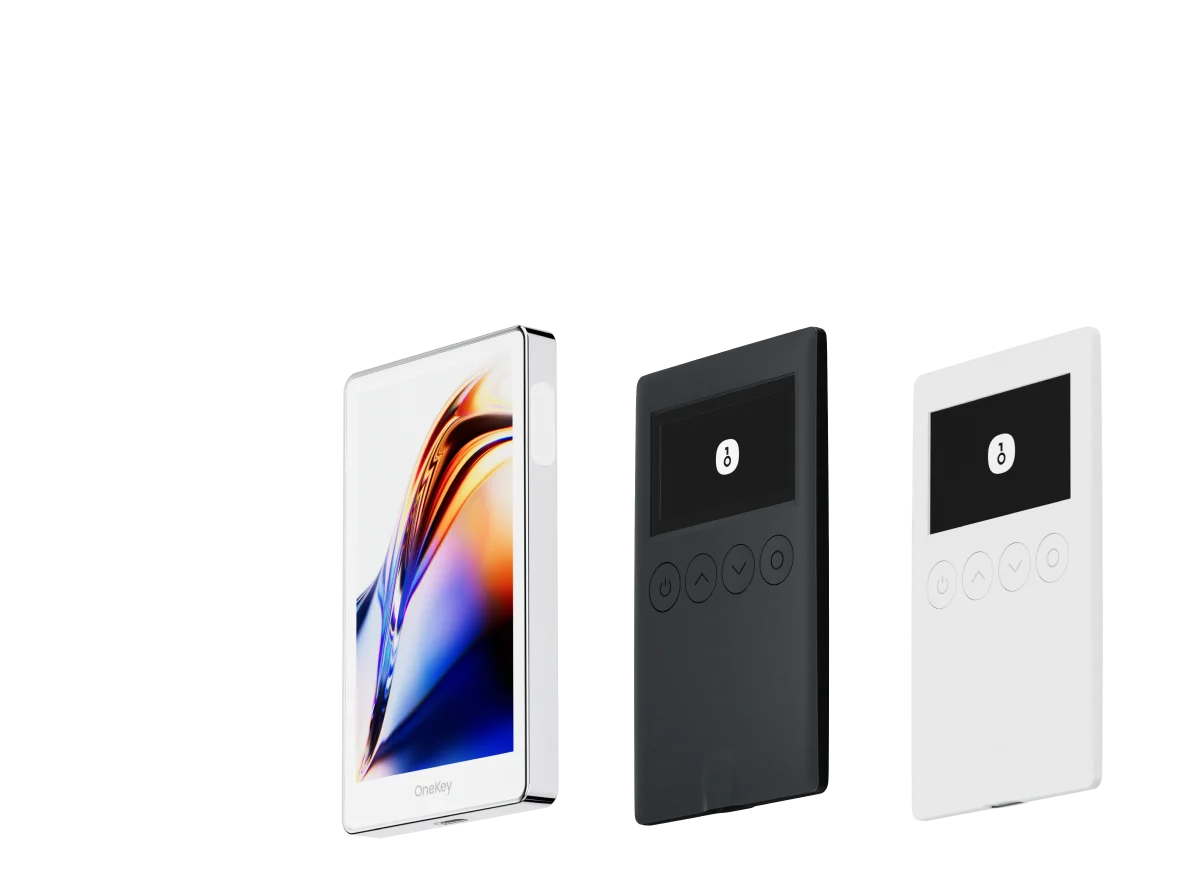
A hardware wallet like OneKey is designed to keep private keys offline, reducing the chance that malware, fake browser popups, or AI-generated social engineering can directly reach the keys that control your assets. For users navigating higher-risk periods—market volatility, phishing waves, and sudden platform restrictions—this separation between online noise and offline signing is often the difference between “almost got scammed” and “funds gone.”
If you’re adjusting your setup for 2026’s reality, prioritize the part that attackers can’t scale with AI: your signing security and custody discipline.