Binance: First 5 Pre-IPO Assets Are Now Live on the Binance Wallet Market Page
Binance: First 5 Pre-IPO Assets Are Now Live on the Binance Wallet Market Page
According to a BlockBeats update dated April 11, 2026, Binance announced that on-chain Pre-IPO assets can now be viewed directly inside Binance Wallet, and that the first batch of five Pre-IPO assets has already gone live on the wallet’s Market page—making it easier for users to discover and track this emerging on-chain category.
This is another clear signal that the crypto industry’s “asset menu” is expanding beyond native tokens: real-world asset tokenization (RWA), tokenized funds, and now Pre-IPO-style exposure are increasingly being presented with the same UX users expect from DeFi markets.
Why this matters: Pre-IPO is becoming an on-chain “asset class” narrative
For years, most retail participants could only access private-company exposure indirectly (funds, secondary brokers, or waiting for an IPO). The on-chain world is attempting a different approach: package economic exposure into a token-like instrument, distribute it globally, and let markets do price discovery 24/7.
Binance Wallet surfacing a dedicated Pre-IPO section inside its Market page is important for two reasons:
- Distribution and attention: Wallet market pages are where users discover new sectors (memecoins, AI, DeFi, RWAs). Adding Pre-IPO assets increases visibility and liquidity potential.
- Convergence of TradFi and crypto rails: Tokenization is no longer just a concept—regulators and global standard-setters have been actively mapping implications, risks, and policy considerations for tokenized securities and other tokenized instruments (see BIS and FSB discussions on tokenisation: BIS tokenisation report, FSB tokenisation implications overview).
What “on-chain Pre-IPO assets” usually mean (and what they don’t)
The term Pre-IPO assets can be misunderstood, especially by crypto-native users.
In many “tokenized Pre-IPO” designs, the on-chain asset is not a direct share certificate in a private company. Instead, it often represents one of the following:
- Synthetic exposure: a derivative-like token tracking a reference price (requires strong oracle, market integrity, and clear counterparty structure).
- Indirect tokenization: exposure backed via an off-chain legal arrangement (for example, an entity holds the reference asset and tokens represent a claim under defined terms).
- Restricted access instrument: participation may depend on jurisdiction, user eligibility, transfer restrictions, and compliance gating.
In practical terms: treat Pre-IPO tokens as a high-risk, structure-dependent product, closer to “RWA meets structured crypto” than a simple spot token.
If you’re new to tokenization trends, it helps to zoom out: tokenized real-world assets have grown rapidly, with tokenized U.S. Treasuries becoming one of the most visible categories on-chain (see dashboard data at RWA.xyz Treasuries).
Key user questions to ask before touching any Pre-IPO asset
Even if Binance Wallet makes discovery easier, discovery is not due diligence. Here’s a practical checklist crypto users should care about in 2026:
1) What exactly is the token’s legal and economic claim?
- Do holders have any contractual claim on proceeds (IPO, acquisition, buyback), or is it purely a market-traded reference instrument?
- Are there transfer restrictions (whitelists, lockups, geographic limits)?
- Does it explicitly state that holders do not have shareholder rights (votes, information rights, cap table protections)?
For U.S.-linked readers, it’s also worth remembering that products resembling securities exposure can trigger securities-law considerations; the SEC’s investor education hub is a useful baseline reference: SEC Investor.gov.
2) Who is the issuer / arranger, and what is the custody story?
- If the product claims backing, where is the backing held and how is it audited?
- If it’s synthetic, what’s the risk model (counterparty, liquidation mechanics, oracle design)?
3) What does liquidity look like in real trading conditions?
Pre-IPO exposure is inherently less transparent than public equities. Watch for:
- thin liquidity and wide spreads
- sudden repricing on rumors
- market manipulation risk (especially in low-float markets)
4) Smart contract risk and wallet-security risk
New asset categories attract copycats and phishing. Common failure modes:
- fake tokens with similar tickers
- malicious approval requests
- spoofed “market pages” and search ads
Before interacting, verify the contract address using reputable explorers and avoid signing transactions you don’t fully understand.
What Binance Wallet listing implies for the broader market in 2025–2026
The last cycle taught the industry that “easy access” can be both a growth engine and a risk amplifier. In 2025–2026, the dominant themes have increasingly centered on regulated rails meeting crypto UX, including:
- expansion of RWA tokenization narratives (with large projections and institutional interest; for a mainstream view, see CoinDesk’s coverage referencing the Ripple–BCG tokenization outlook: CoinDesk on tokenized asset market projections)
- growing policy focus on tokenisation’s systemic implications (see: BIS FSI summary)
- wallets evolving into distribution layers for more complex assets (not just storage)
Binance Wallet adding Pre-IPO assets to its Market page fits this trajectory: wallets are becoming storefronts for financial instruments, not just token containers.
Practical safety tips when exploring Pre-IPO assets via a wallet market page
If you decide to explore, risk-manage like a professional:
- Start with observation mode: track price, volume, and holder distribution before buying.
- Use position sizing discipline: treat it as venture-like risk, not blue-chip exposure.
- Segregate wallets: keep experimental positions separate from your long-term holdings.
- Review approvals regularly: revoke unnecessary allowances and keep your signing surface minimal.
- Assume higher scam density: new narratives always attract fake contracts.
Where OneKey fits: reducing signing and approval risk with hardware isolation
Pre-IPO assets (and RWAs in general) often require interacting with newer contracts and unfamiliar transaction flows. That’s exactly where a hardware wallet helps: it keeps private keys offline and forces explicit confirmation for every signature.
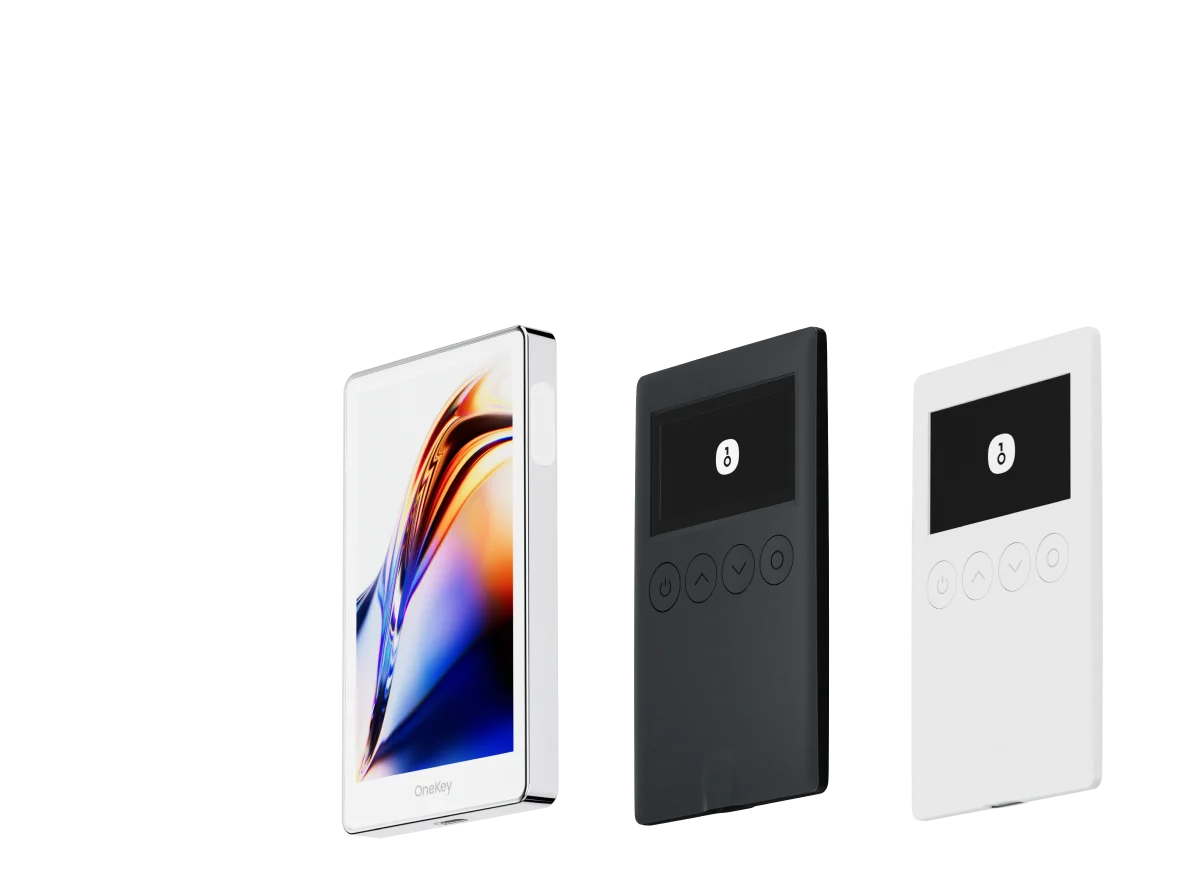
If you’re using Binance Wallet (or any Web3 wallet) to explore higher-risk on-chain categories, pairing it with a OneKey hardware wallet can be a sensible upgrade for users who want self-custody with stronger key isolation—especially when approvals and smart contract interactions become more complex.
This article is for informational purposes only and does not constitute investment advice. Pre-IPO and tokenized asset products can carry significant legal, market, and technical risks. Always do your own research and consider your local regulations before participating.