Google’s Biggest Acquisition Ever: Why Wiz?
Google’s Biggest Acquisition Ever: Why Wiz?
By Beca Jiang & Jaleel Jia | Edited by Sleepy.txt
Cloud wars are expensive. On March 11, 2026, Google officially completed its $32 billion all-cash acquisition of cloud security company Wiz, the largest acquisition in Google’s history. The deal was originally announced in March 2025 and later cleared through regulatory review before closing. (TechCrunch)
At first glance, it looks like an irrational price tag: Wiz was founded in 2020, scaled at breakneck speed, and got bought before a long public-market track record could “justify” the multiple with traditional valuation models. But when you zoom out—especially from a blockchain and crypto security lens—the logic becomes sharper: in a world where infrastructure is increasingly cloud-native, the security layer becomes the moat, the distribution channel, and sometimes the entire business model.
This article breaks down what Wiz is really buying Google, and why the acquisition matters for crypto users, exchanges, and on-chain infrastructure teams heading into 2026.
1) The headline is about Google, but the subtext is about trust
The acquisition surpassed Google’s previous record deal (Motorola Mobility in 2012) and was widely described as Google’s biggest-ever takeover. (AP News)
Why does that matter to crypto?
Because crypto runs on a fragile stack of trust assumptions:
- smart contracts and protocol logic
- key management and signing workflows
- cloud infrastructure for RPC, indexing, sequencers, bridges, analytics, and exchange operations
- people and processes across DevOps, SOC, and incident response
Even if “code is law,” operations are still human, and most human operations sit on top of cloud services.
In 2025, crypto crime and wallet compromise patterns kept evolving, with attackers increasingly targeting individuals and centralized services—often through access, social engineering, and operational weaknesses rather than “pure” cryptography failures. (Chainalysis mid-year update)
This is the uncomfortable reality: cloud security is crypto security.
2) Why Wiz, specifically? The “CNAPP wedge” into everything
Wiz rose by selling a simple promise to security teams: connect your cloud accounts, get immediate visibility, prioritize real risk, and fix fast—without a multi-quarter deployment.
In practice, Wiz sits in the fast-growing category often described as Cloud-Native Application Protection Platform (CNAPP): a convergence of cloud posture management, vulnerability and configuration analysis, identity risk, and workload protection.
From Google’s perspective, Wiz isn’t just a product. It’s a distribution lever:
- Security is one of the strongest drivers for large enterprises choosing (or switching) cloud providers.
- Cloud security tooling that remains “multi-cloud” can still pull budgets, mindshare, and data into Google’s ecosystem.
- The AI era increases the blast radius of misconfigurations and credential leaks; “secure by default” becomes a competitive differentiator, not a checklist item.
The acquisition also lands at a time when stablecoins and tokenized assets are becoming more embedded in mainstream financial workflows, increasing the number of institutions that need both cloud-scale infrastructure and high-assurance security controls. (DTCC on stablecoins and tokenized assets)
3) “It’s overpriced” is a reasonable reaction—until you model the downside
If you only model Wiz as “a fast-growing security SaaS,” $32 billion feels extreme.
But Google is buying downside protection and strategic positioning in three compounding risk curves:
A) Cloud incidents are existential, not embarrassing
For crypto businesses, a cloud breach is rarely limited to “data exposure.” It can become:
- hot wallet compromise
- signing service takeover
- CI/CD pipeline injection that ships malicious code
- API key leakage that enables downstream account takeover
- trading and risk engine manipulation
B) Crypto infrastructure keeps professionalizing (and centralizing operations)
Even “decentralized” ecosystems still rely on centralized components:
- RPC gateways
- indexing and data availability pipelines
- bridges and relayers
- sequencer ops and monitoring
- exchange custody operations and compliance tooling
A large share of this is built on mainstream cloud stacks. Securing these layers is not optional; it’s table stakes.
C) Regulation and enterprise adoption raise the bar
The more stablecoins, tokenized treasuries, and RWA rails show up in real corporate workflows, the more security requirements start to look like traditional finance—continuous monitoring, auditability, least privilege, and provable controls. (DTCC key developments in digital assets)
In that world, a “best-in-class” cloud security platform is not a cost center—it’s how you unlock regulated revenue.
4) What Wiz “does better” (and why crypto teams should care)
Without turning this into a product datasheet, Wiz’s momentum came from a few repeatable advantages that map cleanly onto crypto security needs:
Fast time-to-value in environments that change hourly
Crypto teams deploy constantly: new markets, new chains, new integrations, new monitoring, new compliance hooks. Security tools that require long deployments often lose.
Prioritization that matches real-world attacker paths
In crypto, attackers rarely win via a single bug. They chain:
- identity permissions
- exposed services
- misconfigured storage
- leaked secrets
- lateral movement to production
The ability to reason across these connections is crucial for reducing exploitability, not just producing alerts.
Cross-cloud visibility (the reality of modern crypto ops)
Many crypto orgs are multi-cloud by necessity: performance, redundancy, jurisdiction, vendor risk, and latency. A security layer that can see across clouds better matches real operations.
5) The crypto takeaway: Cloud security won’t save you from key theft
Here’s the key point for users: even if every exchange and protocol had perfect cloud security tomorrow, private key compromise would still be the highest-leverage attack on the system.
That’s why modern crypto security is increasingly layered:
- Cloud security for infrastructure, workloads, IAM, and detection
- Application security for smart contracts, APIs, and supply chain
- Key management for treasuries, operators, and end users
For organizations, that often means segmenting signing away from general compute, enforcing least privilege, and designing “blast radius boundaries.” For individuals, it means reducing exposure of private keys to internet-connected environments.
For general key management principles, it’s worth referencing established guidance such as NIST’s key management recommendations and aligning operational practices with threat models rather than convenience.
6) Practical checklist for crypto teams in 2026 (inspired by this deal)
If Google is willing to spend $32 billion to reduce cloud security risk, crypto teams should at least adopt the mindset. A practical starting checklist:
-
Inventory and minimize secrets
- Rotate API keys
- Eliminate long-lived credentials
- Treat CI/CD tokens as production keys
-
Lock down identity and permissions
- Enforce least privilege
- Monitor privilege escalation paths
- Require strong authentication for cloud consoles
-
Separate signing from general infrastructure
- Keep treasury workflows off shared servers
- Use explicit approval policies for transfers
- Design operational controls for “assume breach”
-
Continuously validate cloud posture
- Misconfigurations are not “one-time” findings
- Make posture checks part of every deployment cycle
-
Have an incident plan that assumes public adversaries
- In crypto, attackers don’t just steal—they often launder quickly
- Response time and containment matter as much as prevention
(For incident response and cloud defense frameworks, the Cloud Security Alliance is a strong reference point.)
7) Where OneKey fits: the “last mile” of crypto security
Google buying Wiz is a reminder that security budgets flow toward the biggest risk. But for most crypto users, the biggest risk is still simple:
If your private key is exposed, everything else is theater.
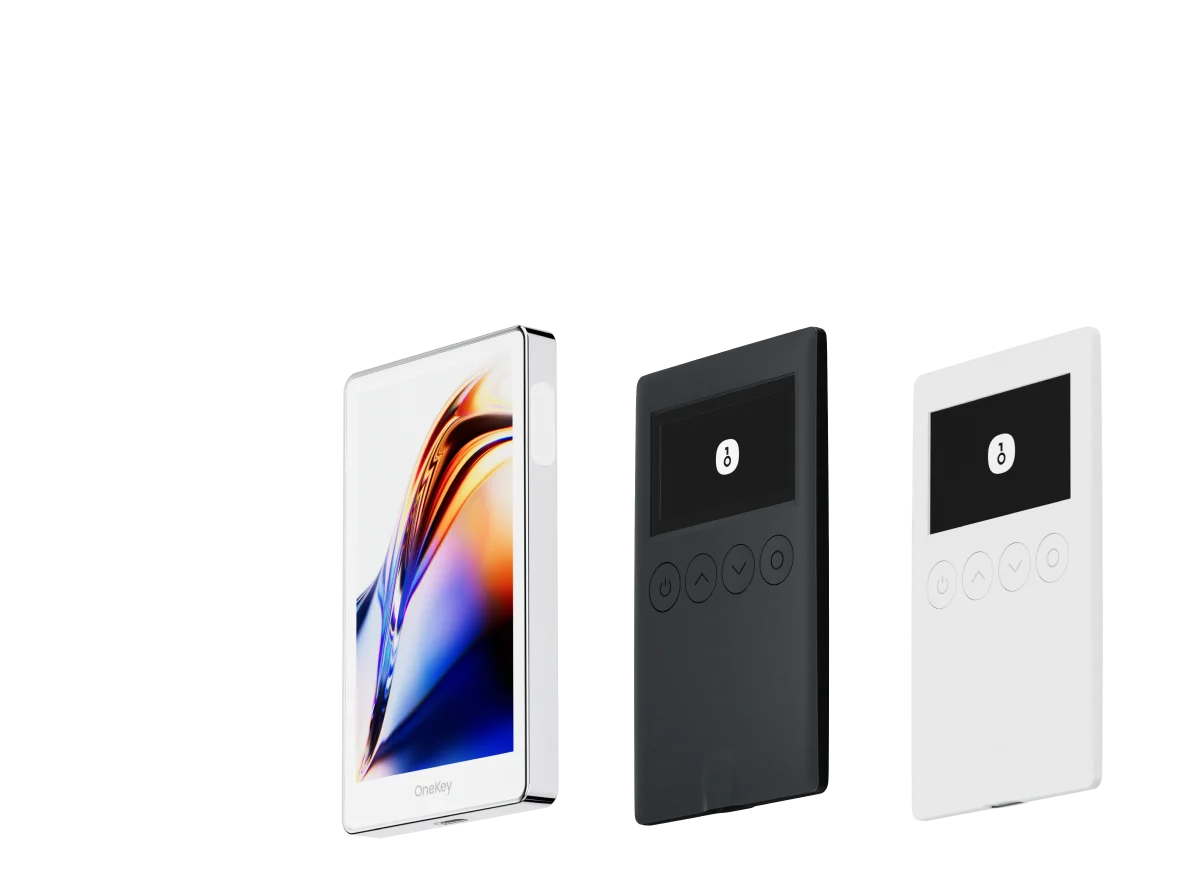
That’s where self-custody and offline signing become relevant. A hardware wallet like OneKey is designed to keep private keys isolated from everyday internet-facing devices, helping reduce the attack surface of malware, phishing, and credential compromise during transaction signing.
If you’re active in DeFi, hold long-term positions, or interact with multiple chains, treating your private key like critical infrastructure—not an app password—is one of the highest-ROI security decisions you can make.
Closing thought
Wiz “deserved” a record-breaking price not because it sells cloud dashboards, but because it sells something the digital economy cannot scale without: confidence.
In crypto, confidence is the product—whether you’re an exchange securing hot wallets, a protocol shipping upgrades, or an individual trying to protect a life-changing portfolio. Google’s biggest acquisition ever is a loud signal: the next phase of growth belongs to ecosystems that treat security as strategy, not insurance.