Active Traders: Hot Wallet vs. Storage Wallet
Active traders face a constant trade-off: speed versus security. A hot wallet lets you react quickly on venues like Hyperliquid, but it also exposes funds to phishing, malicious approvals, and compromised devices. A cold or storage wallet is far safer, but it can feel slow when you need to move fast. Source: Hyperliquid.
This guide breaks down the real differences between hot wallets and storage wallets, then lays out a practical wallet segmentation strategy for traders who want to stay efficient without putting their entire portfolio at risk.
What is a hot wallet, and where does the risk come from?
A hot wallet is any wallet where the private key is stored on an internet-connected device and can be used to sign transactions at any time. Browser extension wallets such as MetaMask are the most common example. Mobile software wallets also fall into this category.
The core risk is that the private key is always available to a connected environment. Every time you interact with a DEX front end, your wallet is in a state where it can be prompted to sign. If your browser is compromised by a malicious extension, your operating system is infected with a keylogger, or you click a phishing link that triggers a harmful approval, an attacker may be able to drain funds or abuse permissions.
Chainalysis research has shown that wallet “drainer” attacks have grown sharply in recent years, with many victims being active DeFi users. These attacks often rely on the same conditions: users keep funds in always-online wallets and fail to revoke risky or outdated approvals.
What is a storage wallet, and why is it safer?
A cold wallet, or storage wallet, keeps private keys away from internet-connected environments. The most common form is a hardware wallet. The private key is generated and stored inside a dedicated secure chip, and transaction signing happens locally on the device. Your computer receives only the signed transaction data; the private key never leaves the hardware wallet.
This design blocks the most common remote attack path. Even if your computer is fully compromised, an attacker should not be able to extract the private key from the hardware wallet.
Standards such as EIP-712 also improve signing safety by allowing structured transaction data to be displayed more clearly. When supported properly, hardware wallets can show what you are signing so you can review details instead of blindly approving an unreadable payload.
A wallet segmentation strategy for active traders
Wallet segmentation is not paranoia. It is standard risk management. The principle is simple: the funds in your hot wallet should only be the amount you can afford to lose in a worst-case security incident.
A practical three-layer setup looks like this:
Layer 1: Trading hot wallet
Use this wallet only for active trading capital in the current cycle. A common guideline is to keep no more than 10% to 15% of your total crypto assets here.
This wallet connects directly to front ends such as Hyperliquid, dYdX, and other DEX or perps platforms. It handles day-to-day trading, deposits, withdrawals, and position management.
Layer 2: Buffer wallet
This wallet holds near-term backup funds. It should not connect to DApps. Its only job is to top up the trading hot wallet when needed.
The buffer wallet can be another software wallet, but the key rule is to avoid token approvals and DApp connections. Treat it as a clean reserve account, not a second trading wallet.
Layer 3: Cold storage wallet
This is where you keep long-term holdings and larger balances. Use a hardware wallet, keep the private key offline, and require physical confirmation for transactions.
Funds should move into cold storage when they are no longer needed for active trading. This prevents a profitable trading wallet from slowly turning into a high-value attack target.
Hot wallet vs. cold wallet: key differences
Why you should not keep all funds in a hot wallet
OWASP phishing guidance highlights a difficult reality: social engineering is one of the hardest threats to eliminate with technology alone. Traders spend time in high-risk information flows: Discord groups, Telegram chats, X/Twitter DMs, fake airdrop links, impersonator accounts, and urgent “limited-time” campaigns. That exposure makes active traders more likely to encounter phishing than ordinary users.
Another risk traders often underestimate is approval buildup. Each time you interact with a DApp, your wallet may leave behind token allowances or contract permissions. Over time, some of those projects may shut down, get compromised, or become malicious while the approval remains active.
A good habit is to periodically review and revoke outdated approvals using tools such as Revoke.cash. Approval hygiene is not optional if you trade from a hot wallet regularly.
OneKey: a practical setup for traders
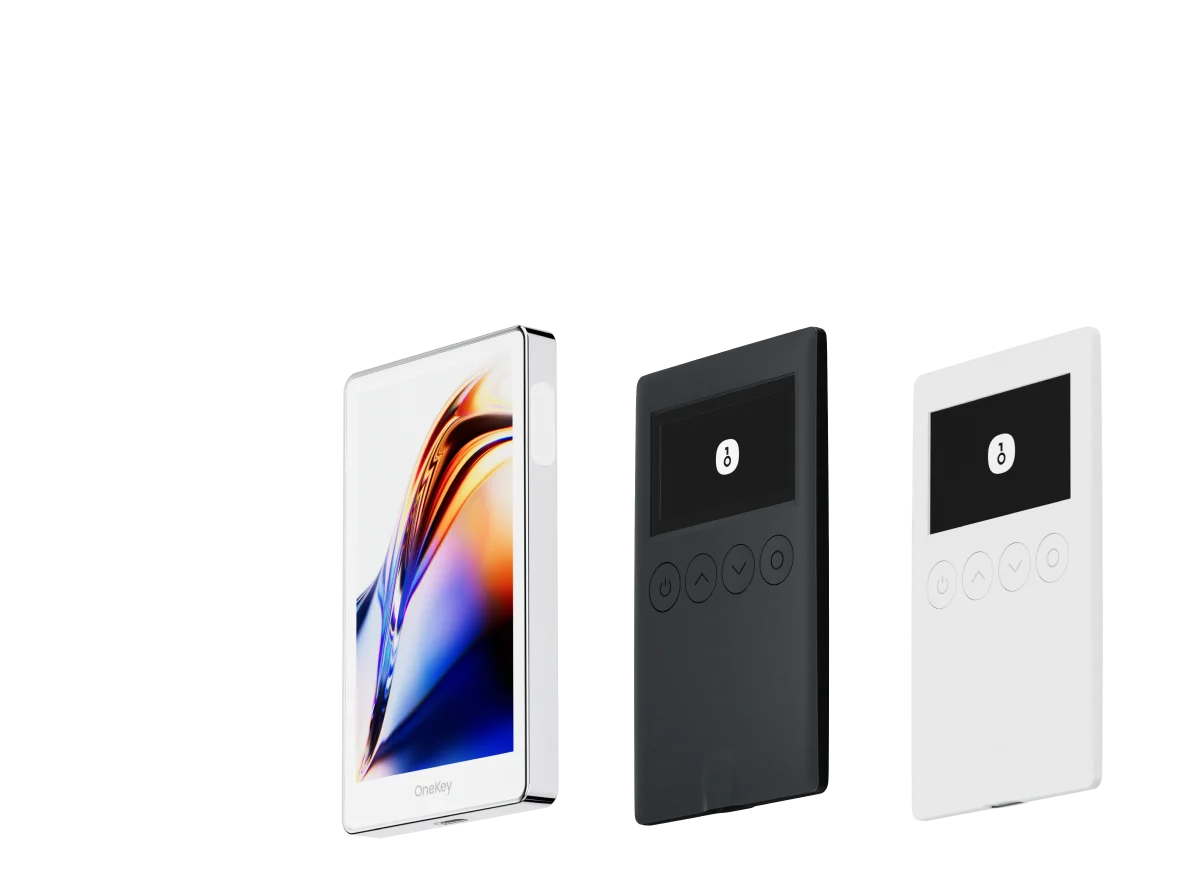
OneKey hardware wallets are designed to balance security with usable DeFi access. You can connect to major DApp front ends through WalletConnect and sign transactions on the hardware device, while the private key remains offline.
That gives traders a stronger security model than a typical browser extension wallet, without completely giving up access to on-chain markets.
For users who want a simpler way to trade perpetual contracts in a no-KYC environment, OneKey Perps provides a practical workflow inside the OneKey ecosystem. Download the latest OneKey app from the official OneKey download page, or review the open-source code on GitHub if you want to inspect how the software works.
FAQ
Q1: How much money should I keep in a hot wallet?
There is no universal number, but a common rule of thumb is to keep hot wallet funds below 10% to 20% of your total crypto assets. More importantly, it should be an amount you can afford to lose in a worst-case scenario.
Anything above your active trading requirement should be moved to cold storage.
Q2: Can a hardware wallet prevent every attack?
No. A hardware wallet cannot prevent every possible attack, but it can remove most remote private-key theft scenarios.
The main remaining risks include physical theft of the device combined with PIN compromise, supply-chain attacks from buying tampered devices, and user error when signing transactions. Always buy from official channels, avoid second-hand or unknown-source hardware wallets, and carefully review every transaction before confirming.
Q3: Can I use a hardware wallet for DeFi trading?
Yes. Through WalletConnect, a hardware wallet can connect to mobile or desktop DApp front ends. The transaction is signed on the hardware device, and the private key does not leave the device.
This workflow is usually a little slower than using a browser extension wallet, but it significantly improves security.
Q4: If I lose my hot wallet seed phrase but still have my hardware wallet, can I recover the funds?
No, not unless the funds are controlled by the hardware wallet’s private key.
A hot wallet and a hardware wallet are separate key systems. Funds in the hot wallet depend on that hot wallet’s seed phrase. The hardware wallet cannot recover them. Every wallet seed phrase must be backed up separately and securely.
Q5: How often should I rebalance my wallet layers?
Review your wallet allocation once per trading cycle, such as weekly or monthly. If your hot wallet balance grows because of trading profits, move the amount above your operating limit into cold storage.
Do not let convenience turn your hot wallet into your main treasury. That is one of the most common ways traders gradually lose their security discipline.
Conclusion: use wallet layers to control risk
Professional traders do not choose between speed and security as a binary decision. They separate funds by purpose.
Use a hot wallet for execution. Use a buffer wallet for clean liquidity. Use a hardware wallet for long-term storage and larger balances.
If you want a practical setup, try OneKey, create a clear wallet segmentation workflow, and use OneKey Perps for on-chain perpetuals with stronger key security habits built into your process.
Risk warning
This article is for educational purposes only and does not constitute investment, financial, legal, or tax advice. Crypto trading is highly risky, and market volatility can result in the loss of all principal. Wallet security practices can reduce technical and operational risk, but they cannot eliminate market risk. Make independent decisions only after understanding the risks.