Best Hyperliquid Wallet for Swing Traders
Swing traders typically hold positions for several hours to several days. Instead of chasing tiny price moves like scalpers, they look for larger market swings with cleaner risk/reward setups. That changes what matters in a wallet: security, position visibility, and multi-chain asset management become more important, while ultra-low-latency execution is less critical. Source: Hyperliquid docs.
This guide breaks down what swing traders should look for in a Hyperliquid wallet and why OneKey is a practical choice for managing the full workflow.
Key comparison table
What swing traders need from a wallet
For swing trading perpetuals, the wallet is not just a signing tool. It is part of your risk management stack.
Key requirements include:
- Security first: positions may stay open for days, so wallet protection matters more than convenience alone.
- Multi-chain asset management: swing opportunities and collateral may span multiple chains, so moving and consolidating funds should be simple.
- Clear position and asset visibility: traders need to see current holdings, PnL, margin usage, and available collateral without jumping between apps.
- Take-profit and stop-loss support: conditional orders help manage trades without watching the screen 24/7.
- Reasonable fee structure: swing traders trade less often than scalpers, but position sizes can be larger, so fees and funding still matter.
Why OneKey works well for Hyperliquid swing traders
OneKey Wallet is especially useful for swing traders because it combines secure custody, multi-chain asset management, and a practical perps workflow.
Separate long-term assets from active margin
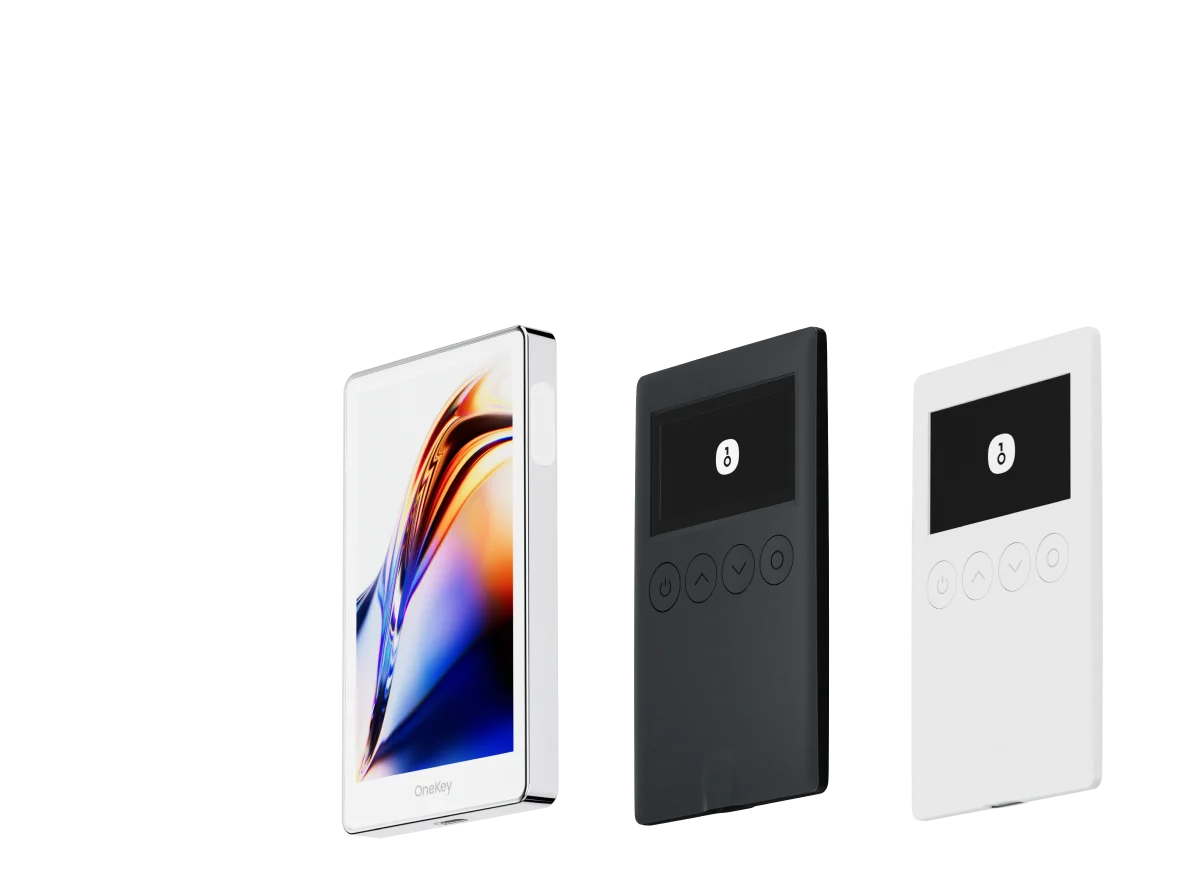
OneKey offers both software wallet and hardware wallet options. For traders holding larger swing positions, a sensible setup is to keep core assets in a OneKey hardware wallet and only move the margin needed for active trading into a software hot wallet.
This separation helps reduce single-point risk. Your long-term funds do not need to sit in the same wallet used for frequent dApp connections and trading activity.
Manage assets across major chains
OneKey supports major ecosystems such as Ethereum, Arbitrum, and Solana, making it easier to manage funds across chains from one wallet. If your capital is spread across different networks, you can use OneKey’s aggregated Swap feature to convert assets into USDC with low-cost routing, then fund your Hyperliquid account.
For swing traders, this matters because capital efficiency is often about being able to move collateral when a setup appears, without losing track of where funds are held.
Use OneKey Perps as the practical workflow
With OneKey Perps, traders can access perpetual trading from within the OneKey ecosystem while keeping wallet management and trading activity closer together. For swing traders, that means a cleaner workflow: manage assets, prepare collateral, monitor exposure, and execute perps trades without constantly switching between unrelated tools.
Download OneKey and try OneKey Perps if you want a more organized setup for Hyperliquid-style swing trading, especially if you already manage assets across multiple chains.
Hyperliquid fees and funding for swing traders
Swing traders hold positions for hours or days, so costs are not limited to entry and exit fees. Funding rates can become a major part of trade performance.
Funding is the periodic payment between long and short positions. The longer you hold a position, the more important cumulative funding becomes.
According to Hyperliquid’s official documentation, funding is settled hourly, and the rate depends on the imbalance between long and short open interest. Before entering a swing trade, check whether funding is positive or negative and whether you are paying or receiving it. Holding a position for multiple days in an expensive funding direction can materially reduce expected returns.
For trading fees, many swing traders prefer limit orders. On Hyperliquid, using limit orders can allow traders to act as makers and potentially receive maker rebates. This is one reason Hyperliquid can be attractive for swing strategies: patient entries and exits may improve the overall cost profile compared with market-order-heavy trading.
Position management for swing trading
Because swing trades last longer than scalp trades, position management needs to be planned before entry.
A practical workflow includes:
- Define the trade idea and invalidation level before opening the position.
- Check funding direction and expected holding period.
- Use limit orders where appropriate to reduce execution costs.
- Set take-profit and stop-loss orders immediately after or during entry.
- Keep spare USDC available for margin buffer if volatility increases.
- Review wallet permissions and connected dApps regularly.
Do not rely on manual reaction alone. Swing trading often involves being away from the screen, so conditional orders and margin buffers are essential.
Wallet security practices for longer-held positions
When a position may stay open for days, wallet hygiene becomes part of trade risk.
Recommended practices:
- Regularly review and revoke unnecessary dApp approvals using tools such as Revoke.cash.
- When connecting to Hyperliquid through WalletConnect, verify that the domain and connection request are correct.
- Be cautious of fake Hyperliquid frontends. OWASP phishing guidance highlights fake DeFi interfaces as a common attack pattern.
- Avoid signing wallet transactions over public Wi-Fi.
- Keep larger reserves in a OneKey hardware wallet and use a separate hot wallet for active trading margin.
The goal is not to make trading complicated. It is to reduce the chance that a wallet compromise affects your entire capital base.
Comparing Hyperliquid with other perps platforms
Swing traders should compare more than just chart liquidity. Funding mechanics, order types, maker/taker fees, and liquidation rules can vary across platforms.
You can review dYdX documentation and GMX documentation to compare funding models and execution design before choosing the platform that best fits your swing strategy.
Hyperliquid’s maker rebate structure may be attractive for traders who use patient limit-order entries, while other platforms may offer different advantages depending on collateral type, liquidity, or product design.
FAQ
Q1: Do swing traders need a hardware wallet?
For larger positions or meaningful capital, a hardware wallet is strongly recommended. A practical setup is to keep core assets in a OneKey hardware wallet and only place the margin needed for active trades in a software hot wallet. This separation can reduce single-point risk.
Q2: How much can funding affect a swing trade?
It can be significant. For example, if funding is 0.01% per hour and you hold a position for 48 hours, the cumulative funding cost is about 0.48% of notional value. On a 10x leveraged position, that is roughly equivalent to 4.8% of the trader’s initial margin. Always check funding before entering and include it in your PnL plan.
Q3: Can I monitor Hyperliquid positions on mobile with OneKey?
Yes. With the OneKey mobile app, you can monitor wallet assets from your phone and use a mobile browser to access the Hyperliquid app for position tracking. This is useful for swing traders who need to check exposure while away from a desktop setup.
Q4: How do swing traders set take-profit and stop-loss orders on Hyperliquid?
Hyperliquid supports conditional TP/SL orders. You can set take-profit and stop-loss prices from the trading interface. Once configured, the orders can execute when triggered even if your wallet is not actively connected, which is useful for traders who cannot monitor markets all day.
Q5: How much spare margin should swing traders keep?
A conservative approach is to keep account margin well above the minimum needed to open the trade, often 2–3x the required margin depending on volatility and strategy. Keeping some USDC available in your Hyperliquid account can help you add margin or adjust positions quickly if the market moves sharply.
Conclusion
For Hyperliquid swing traders, one of the key advantages is the maker rebate model. Using limit orders for entries and exits can improve the cost structure and help protect the risk/reward profile of each trade.
For wallet setup, OneKey offers a strong balance of security and usability: hardware and software wallet options, multi-chain asset management, and swap functionality without extra markup. Combined with OneKey Perps and Hyperliquid’s TP/SL tools, it gives swing traders a practical workflow for managing collateral, execution, and risk.
Download OneKey and try OneKey Perps if you want a cleaner way to manage multi-chain assets and trade perps with a more security-conscious setup.
Risk warning: This article is for informational purposes only and is not investment, legal, or financial advice. Perpetual futures trading is highly risky, and leverage can result in the loss of all capital. Funding rates may rise sharply during extreme market conditions. Always assess the risks before opening or holding a position.