Using a Multisig Wallet for No-KYC Trading: Pros and Cons
Multisig wallets are widely used for institutional treasury management and DAO treasuries. But are they a good fit for individual users who want to trade on-chain without KYC?
The answer is nuanced. Multisig can significantly improve security, but it also adds operational friction and introduces new compliance and workflow considerations. This article breaks down how multisig works, where it sits in the no-KYC landscape, and when it makes sense for trading versus long-term asset storage.
Key comparison table
How multisig wallets work
Multisig, short for multi-signature, means an account requires M signatures out of N keys before a transaction can be executed. This is usually written as an M-of-N setup.
For example, a 2-of-3 multisig means there are three private keys, and any two of them must approve a transaction before funds can move.
In the Ethereum ecosystem, the most common multisig implementation is Safe, formerly known as Gnosis Safe. Safe is a smart contract deployed on-chain. The multisig rules are written into the contract, and signature verification plus transaction execution happen transparently on-chain.
On Bitcoin, multisig is implemented through native scripts such as P2SH or P2WSH, without relying on smart contracts.
Both models can be non-custodial. No third party holds your private keys, which is why using a multisig wallet by itself does not trigger KYC.
Where multisig fits in no-KYC compliance
A multisig wallet is a self-custody tool, just like a regular single-signature EOA wallet. The compliance question is not “how many keys are required?” It is “is a regulated financial institution custodying assets on your behalf?”
Under FinCEN guidance, software wallet providers — whether single-sig or multisig — are generally distinguished from regulated money services businesses when they do not take custody of user funds. If your multisig is self-custodied and the keys are controlled by you or by parties you personally trust, KYC is not required simply because you use multisig.
The EU’s MiCA framework also takes a relatively lighter approach toward non-custodial wallet providers and does not automatically treat them as crypto-asset service providers requiring mandatory registration.
In short: multisig does not create a KYC requirement by itself. Custody and regulated intermediary activity are the key factors.
Benefits of using multisig for no-KYC trading
It greatly reduces single-point-of-failure risk
A regular single-sig wallet has one major weakness: one private key controls everything. If that key is leaked, lost, or stored on a compromised device, the assets are immediately at risk.
Multisig spreads that risk across multiple keys.
For users trading contracts on-chain, this means that even if one device is hacked and one key is exposed, an attacker still cannot move funds without the additional required signature or signatures.
It works well for shared account control
If multiple people manage the same trading or investment account — for example, business partners, a family office, or a small investment group — multisig gives you a native way to require shared approval before funds move.
This does not depend on a centralized exchange’s internal permission system. The authorization logic lives directly in the wallet structure.
It creates an auditable signing history
With on-chain multisig contracts such as Safe, approvals and transaction history are recorded on the blockchain. This makes fund flows easier to review after the fact.
For teams, partners, or investors who need transparency around how assets are moved, this auditability is one of multisig’s strongest features.
Limitations of using multisig for no-KYC trading
Speed is the biggest issue for derivatives trading
On-chain perpetuals trading on venues such as Hyperliquid, GMX, or dYdX often requires fast reactions to market moves. During volatility, waiting for multiple signers to review and approve a transaction can mean missing an entry, failing to exit on time, or taking larger losses in extreme conditions.
For high-frequency strategies or any setup where execution speed matters, multisig is usually not the best execution wallet.
Multisig adds operational complexity
Every extra key improves resilience only if it is managed correctly. If all keys are stored on the same laptop, multisig gives you much less protection than it appears to. If one signer is unavailable, urgent actions can also be delayed.
There is also setup complexity: signer devices, backup locations, recovery procedures, approval thresholds, and transaction simulation all need to be thought through before funds are moved in.
A practical setup: combine multisig and single-sig wallets
For most individual users, the best approach is not “put everything in multisig.” A layered setup is usually more practical:
- Large, lower-frequency funds: use a 2-of-3 multisig, ideally with hardware wallets as signing devices, to maximize security.
- Daily trading funds: use a single-sig hot wallet for speed and convenience, but only keep the amount needed for current trading activity.
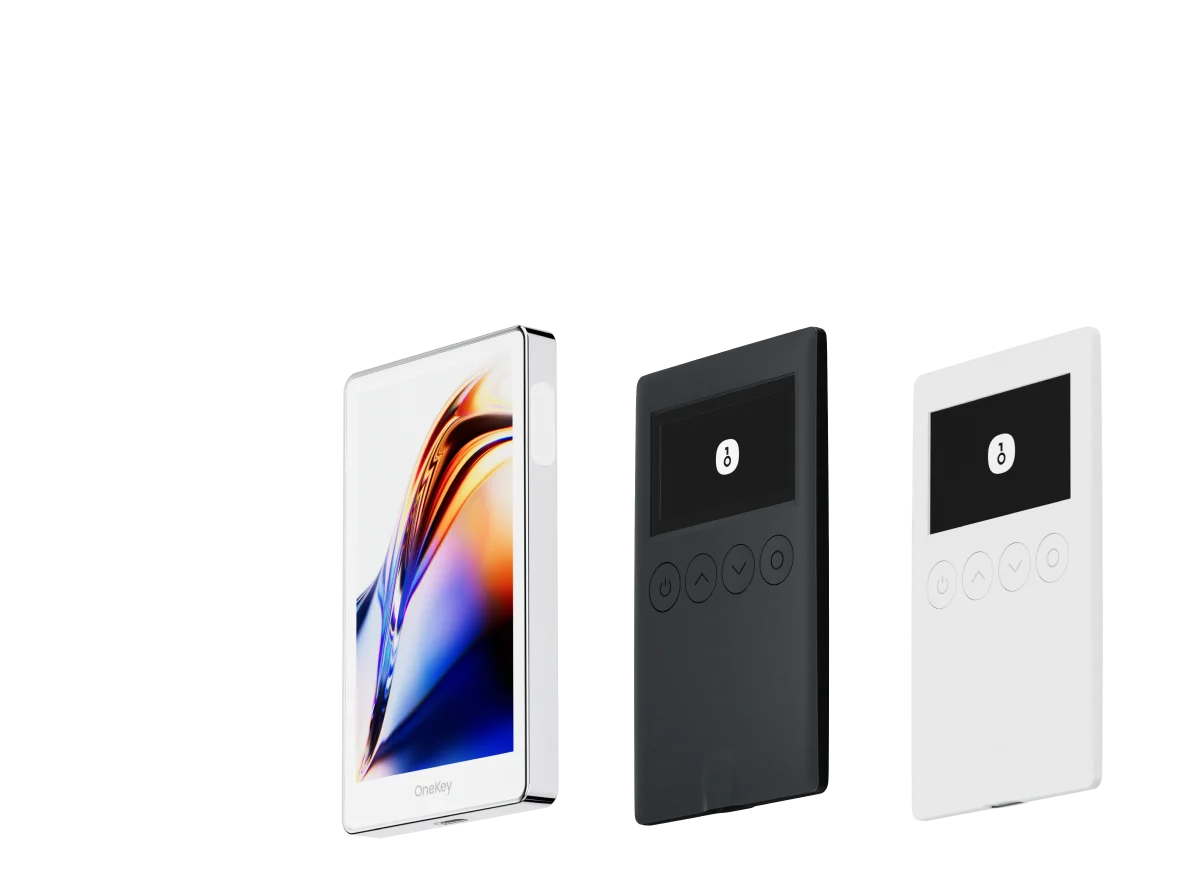
OneKey Wallet can fit into this layered workflow. It can be used alongside multisig setups such as Safe, and OneKey hardware wallets can serve as signing devices within a multisig architecture.
For users who need both security and trading efficiency, this layered model is more realistic than relying on one wallet structure for everything.
OneKey Perps is better suited to the hot-wallet layer for day-to-day on-chain position management. You can keep only the active trading balance in your OneKey Wallet, use OneKey Perps for execution, and reserve multisig for larger funds that do not need constant movement.
Multisig in DAO and institutional contexts
Although this article focuses on individual users, multisig is also important in DAO and institutional settings.
- DAO treasuries often use higher-threshold multisig setups such as 5-of-9 to support decentralized governance and reduce unilateral control.
- Institutional custody providers may also use multisig, but they usually add KYC because they are regulated financial institutions offering custody services.
That second model is very different from a self-custodied multisig used by an individual.
This reinforces the key point: KYC is usually tied to the role of an institution, not to the multisig technology itself.
FAQ
Q1: Does a multisig wallet itself create regulatory risk?
A multisig wallet is a self-custody tool and generally has the same regulatory position as a normal single-sig wallet. As of now, major jurisdictions including the United States and the European Union do not treat personal use of a multisig wallet as a regulated activity by itself. The regulated activity is typically commercial custody of funds, not the use of wallet software.
Q2: Does Safe require KYC?
No. Safe is an open-source smart contract framework. Users can deploy and use Safe contracts without identity verification. Creating a Safe account requires an Ethereum address, not account registration or submission of personal information.
Q3: Is multisig suitable for high-frequency on-chain perps trading?
Usually not. The coordination required for multiple signatures makes multisig a poor fit for fast execution. A better setup is to use multisig for storage, then move only the funds needed for active trading into a single-sig hot wallet such as OneKey Wallet and trade through OneKey Perps.
Q4: How do I make sure all multisig keys are not concentrated on one device?
This is one of the most important multisig security rules. Store different signing keys on different media and in different places. For example, one key can be on a hardware wallet, another in a software wallet on a separate device, and a third seed phrase stored offline. Avoid keeping multiple keys on the same computer, or the main security benefit of multisig is weakened.
Q5: Can ERC-4337 account abstraction improve the multisig experience?
Yes. EIP-4337 makes it possible to add multisig-style validation logic to smart accounts through modular plugins, while also supporting features such as batched transactions and gas abstraction. This can be more flexible than traditional Safe multisig, but it also adds smart contract complexity. Users should choose implementations that have been properly audited.
Conclusion: multisig is a tool, not a magic shield
Multisig wallets are powerful security tools. They are especially useful for protecting larger balances and requiring joint authorization. But for users who need fast, flexible on-chain trading, multisig is usually better as a storage layer than as the daily execution wallet.
A practical approach is to split funds by size and frequency of use: keep larger reserves in multisig, and keep only active trading capital in a hot wallet. OneKey can support both sides of this workflow — from hardware wallets used as multisig signing devices to the OneKey app used with OneKey Perps for everyday on-chain trading.
If this setup fits your needs, you can try OneKey, set up a wallet, and use OneKey Perps for active position management while keeping larger funds in a more conservative multisig structure.
Risk warning: This article is for informational purposes only and is not financial, investment, or legal advice. Multisig wallet configuration can be technically complex, and mistakes may result in loss of access to funds. On-chain derivatives and perpetuals trading are high-risk activities, and market volatility can lead to loss of principal. Make your own decisions based on your risk tolerance.