NEAR Launches a New Incentive Airdrop: Snapshot Planned When Confidential Intents TVL Reaches $70M
NEAR Launches a New Incentive Airdrop: Snapshot Planned When Confidential Intents TVL Reaches $70M
On June 11, 2026, NEAR introduced [email protected], a milestone-style incentive program designed to reward users who actively use Confidential Intents—NEAR’s privacy-focused, cross-chain execution mode available on near.com. Unlike many “announce now, distribute later” campaigns, this program is explicitly tied to measurable on-chain usage: a snapshot will only be taken once Confidential Intents TVL reaches $70 million, after which milestone rewards will be allocated to eligible wallets.
This article breaks down what Confidential Intents is, why NEAR is using a TVL-based snapshot, how eligibility works, and what to watch for if you plan to participate.
Why Confidential Intents Matters in 2026: Privacy Meets Cross-Chain Execution
Crypto in 2025–2026 has been shaped by two user demands that often conflict:
- Better cross-chain UX (fewer bridges, fewer approvals, fewer moving parts)
- Better execution quality (less MEV, less frontrunning, less strategy leakage)
NEAR’s answer is an “intents” architecture, where users express outcomes (e.g., “swap Asset A to Asset B”) while solvers compete to execute efficiently. Confidential Intents adds an additional layer: optional confidential execution intended to reduce MEV-style interference and limit information exposure during execution.
NEAR describes Confidential Intents as running on a dedicated private shard connected back to NEAR via a TEE-based bridge, aiming to provide confidentiality without requiring users to generate ZK proofs locally or change their wallet setup. You can read NEAR’s overview on the official product page for Confidential Intents, and broader market context around the launch has been covered by CoinDesk.
What Is [email protected], and Why Is the Snapshot Tied to $70M TVL?
[email protected] is positioned as a multi-round incentive track that rewards real activity on Confidential Intents. The key mechanic is simple:
- No one receives tokens immediately
- NEAR will take a snapshot only when Confidential Intents TVL reaches $70,000,000
- At that milestone, eligible wallets will receive milestone tokens based on their balance and activity
Using TVL as the trigger is a signal: NEAR is optimizing for sustained usage and liquidity depth, rather than a one-day spike of transactions.
If you want a neutral place to monitor TVL-style metrics across DeFi, DeFiLlama’s TVL dashboards are widely used in the industry, and there is also a dedicated page for NEAR Intents on DeFiLlama.
Drop 1: Distribution Size, Wallet Cap, and “Locked Reward” Design
According to the program rules shared by NEAR:
- Drop 1 distributes 333,333 milestone tokens
- Each wallet is capped at 2% of the total airdrop pool (to reduce whale concentration)
- The reward is locked at first: milestone tokens cannot be sold or transferred initially
This “locked reward” structure is increasingly common in 2026 incentive design. It aims to reduce immediate sell pressure and to align recipients with longer-term network growth, but it also means participants should not treat the airdrop as instantly liquid income.
The 3.33 Trigger: How Milestone Tokens Convert Into NEAR
[email protected] ties conversion to a market condition:
- When NEAR’s volume-weighted average price (VWAP) stays at $3.33 or above for 3 consecutive days, milestone tokens convert 1:1 into NEAR
VWAP is a standard market microstructure metric that reflects average traded price weighted by volume. If you’re unfamiliar with it, Investopedia’s VWAP explainer is a helpful reference.
Important implication: even after the TVL snapshot happens and you receive milestone tokens, they may remain locked until the VWAP condition is met.
Eligibility: The Minimum Requirements to Be Included in the Snapshot
To be eligible for the snapshot, NEAR states that a wallet must meet both conditions:
- Maintain a confidential balance over $100 on near.com (denominated in any supported asset), and keep it continuously above that threshold
- Complete at least one confidential swap
From a user-behavior perspective, this is designed to filter out pure “claim farmers” who do not actually use Confidential Intents.
What affects final allocation beyond the minimum?
NEAR indicates that balances and activity above the threshold can influence the final allocation—meaning that users who provide more liquidity (above $100) and demonstrate more usage may receive more.
Just as importantly, NEAR also notes that:
- Past activity counts toward the distribution
- Allocation data will continue to update until the snapshot condition is met
- New users can still join and potentially improve their allocation before the snapshot
Why This Airdrop Structure Reflects a Bigger Industry Shift
[email protected] is part of a broader 2025–2026 trend: incentive programs are moving away from simple “early user” badges and toward behavior-weighted distribution—especially for cross-chain and privacy-related infrastructure.
Three reasons this matters:
- Cross-chain liquidity is sticky only when execution is reliable. TVL and repeated swaps are proxies for “real” adoption.
- Privacy features attract sophisticated flow. But they also raise operational and compliance questions, so projects increasingly emphasize selective confidentiality and controlled execution environments.
- Sybil resistance is now table stakes. A per-wallet cap (2%) plus minimum balance and swap requirements helps reduce extreme concentration and low-effort farming.
Practical Participation Checklist (Without Over-Optimizing)
If you’re considering participating, focus on correctness and risk control rather than chasing marginal points:
- Use only the official near.com domain and double-check URLs before connecting anything.
- Keep your confidential balance comfortably above $100 to reduce the risk of temporarily dipping below the requirement due to price volatility.
- Execute at least one confidential swap early enough that you can verify it worked as intended, rather than rushing near the end.
- Expect fees and execution constraints that differ from public-chain swaps, especially when routing cross-chain.
For a detailed view of platform-level risk disclosures related to Confidential Intents, NEAR’s near.com Terms is worth reading—particularly the sections describing confidentiality assumptions, operational risks, and potential changes to functionality.
Security Notes: Avoid Turning an Airdrop Into a Loss
Airdrops often attract phishing, fake claim pages, and wallet-draining approvals. A few high-signal practices:
- Never import seed phrases into random websites or “airdrop checkers.”
- Treat any “instant unlock” or “guaranteed allocation” message as suspicious.
- Use a dedicated wallet for on-chain activity when possible, separating long-term holdings from experimental interactions.
- Keep a written record of where you interacted (domains, dates, and transaction intents) so you can audit later if something looks off.
Where OneKey Fits: Protecting Long-Term Holdings After Rewards Unlock
[email protected] rewards are designed to be locked first and only later convert into NEAR under the VWAP condition. If you do end up holding NEAR for the medium or long term, this is exactly where a hardware wallet can make sense: minimizing hot-wallet exposure once the “active participation” phase ends.
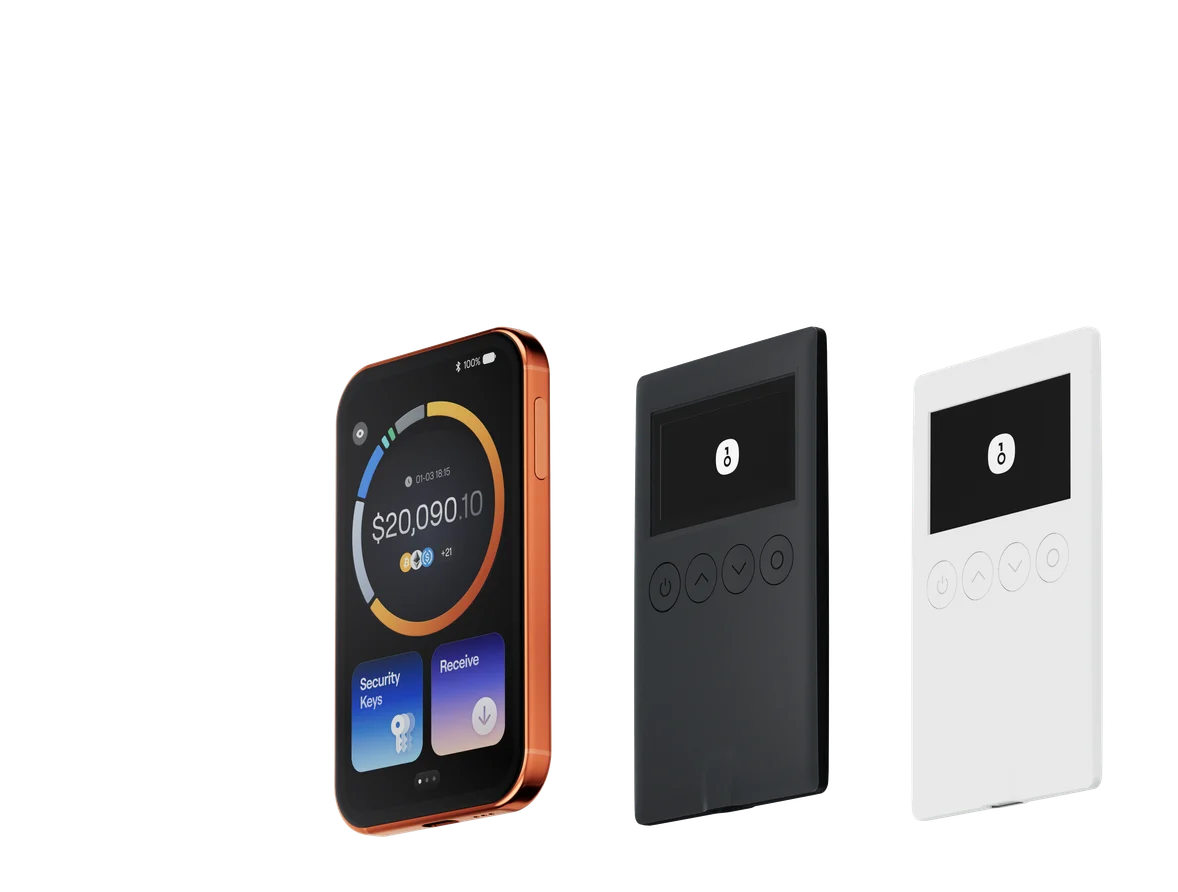
OneKey focuses on isolating private keys from internet-connected environments, which can be especially valuable after incentive campaigns when attackers target recipients. A common operational pattern is:
- Use a smaller, dedicated wallet for interacting with dApps and swaps
- Move longer-term holdings to a more secure storage setup once you no longer need frequent signatures
Closing Thoughts
[email protected] is not just “another NEAR airdrop.” Its mechanics—a $70M TVL snapshot trigger, activity-weighted allocation, locked milestone tokens, and VWAP-based conversion—reflect a more mature incentive design aimed at sustained usage of privacy-enabled cross-chain execution.
For users, the key is to participate deliberately: understand the eligibility rules, track the TVL milestone, and take security seriously. If NEAR follows through with additional rounds that require progressively higher community activity, early familiarity with Confidential Intents could become a meaningful advantage—without needing to overextend risk.