Seed Phrase Security Playbook for No-KYC Traders
Choosing a no-KYC, self-custody trading workflow means taking back control — and taking on the security responsibilities that a centralized exchange would normally handle for you. There is no support team that can reset your account, and no insurance fund that covers mistakes in private key management.
This playbook explains how no-KYC traders can build a practical seed phrase security system that is resilient enough for real trading, not just long-term holding.
Key comparison table
What a seed phrase really is
A seed phrase, also called a recovery phrase, is usually a set of 12 or 24 English words. It is the human-readable backup for your wallet’s private keys.
Under the BIP-39 standard, a seed phrase can deterministically generate an entire tree of private keys and addresses. In practice, whoever controls your seed phrase can control every asset held by the wallet addresses derived from it.
MetaMask docs’s official documentation is clear on this point: having the seed phrase is equivalent to having full control of the wallet. Any “support agent,” “verification flow,” “airdrop claim,” or “authorization process” that asks for your seed phrase is a scam.
High-risk mistakes traders make most often
For active traders, seed phrase risk usually comes from speed, convenience, and operational shortcuts. Common mistakes include:
- Saving the seed phrase in screenshots, cloud notes, email drafts, chat apps, or password managers without a clear threat model
- Typing the seed phrase into a website or form that claims to “verify” or “sync” a wallet
- Importing the same seed phrase into multiple browser wallets across different devices
- Keeping the only backup in one physical location
- Using a hot wallet for both long-term storage and high-frequency trading
- Blind-signing transactions without checking the destination, contract, or approval details
A safer setup starts with strong backups and then adds daily trading discipline.
The gold standard for seed phrase backups
Prioritize physical backups
A paper backup is the simplest option, but it needs to be done properly:
- Use durable paper or a dedicated seed phrase backup card, not a random sticky note.
- After writing it down, verify the backup by checking that you can reproduce the exact word order.
- Do not print your seed phrase. Printer memory, print history, and networked office printers can leave recoverable traces.
For larger balances, a metal backup is worth considering. Stainless steel or titanium seed phrase plates are designed to withstand fire, flooding, and physical wear. They are not mandatory for every user, but they are a sensible upgrade when the wallet secures meaningful capital.
Store backups in multiple locations
A single backup location is a major point of failure. A better approach is to keep copies in two or three physically separate places.
Good locations may include:
- A home safe
- A bank safe deposit box
- A trusted family member’s secure storage location
Avoid keeping every backup in the same building, and ideally avoid concentrating all backups in the same city if the amount at risk justifies stronger redundancy.
The goal is simple: a fire, flood, theft, or access issue at one location should not permanently lock you out of your funds.
Consider Shamir backup for high-value wallets
For high-value accounts, Shamir’s Secret Sharing can add flexibility. Instead of storing one complete seed phrase, the backup is split into multiple shares. You define how many total shares exist and how many are required to recover the wallet.
For example, you might create five shares and require three of them to restore access. This reduces the risk of one lost or stolen backup compromising the entire wallet.
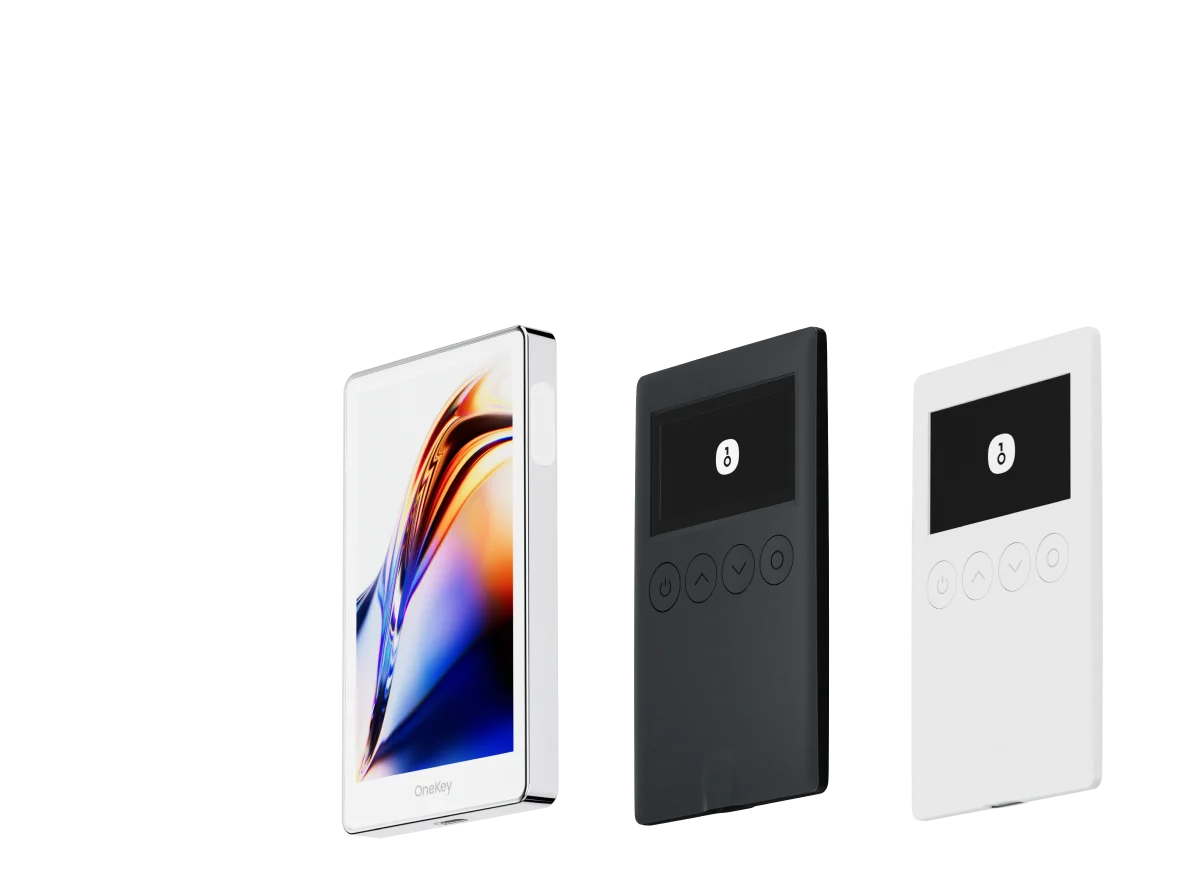
Some hardware wallets, including OneKey hardware wallets, support advanced backup models such as Shamir backup. For experienced users, this can improve recovery resilience without exposing the complete seed phrase in a single location.
Hardware wallets are essential for serious no-KYC trading
If you trade frequently on platforms such as Hyperliquid, dYdX, GMX, or other decentralized derivatives venues, a hot wallet is always exposed to online risk. Browser extensions and software wallets are convenient, but they live on internet-connected devices that can be compromised by malware, malicious extensions, clipboard hijackers, or phishing pages.
A hardware wallet changes the security model by keeping private keys isolated inside the device.
With a OneKey hardware wallet:
- The seed phrase is generated inside the device and is never sent to an internet-connected computer.
- Transactions are signed on the hardware device, while the computer only passes unsigned transaction data.
- Even if the computer is infected, malware cannot directly extract the private key from the hardware wallet.
- The device screen shows transaction details so you can verify what you are signing.
Used together with the OneKey wallet app, this gives traders a smoother DEX workflow while maintaining hardware-level private key protection.
For active perps traders, a practical setup is to keep long-term funds and larger balances secured by a OneKey hardware wallet, while using OneKey Perps for no-KYC perpetuals trading with a controlled amount of working capital.
Daily operational security habits
Seed phrase security is not only about backup storage. Your day-to-day trading behavior matters just as much.
Verify addresses before every transfer
Before sending funds, check at least the first six and last six characters of the destination address.
Clipboard hijacking malware can replace a copied address with an attacker-controlled one. This type of attack is widely documented, including in Chainalysis research on crypto drainers.
Do not rely on “I copied it correctly.” Verify it on-screen, especially for large transfers.
Avoid phishing sites
Always access DEXs and trading apps through bookmarks or official links. Do not click search engine ads to reach a trading platform.
OWASP’s analysis of phishing attacks highlights how visually identical fake websites remain one of the most effective attack methods. A fake DEX front end can trick you into signing malicious approvals or transactions while looking almost exactly like the real site.
Manage token approvals
Regularly review and revoke smart contract approvals you no longer use.
Tools such as Revoke.cash provide a clear interface for checking past approvals and removing unnecessary permissions. This reduces the risk that an old approval can later be abused by a malicious or compromised contract.
For traders, this is especially important because DEX and perps workflows often require repeated contract interactions.
Separate devices when possible
If your trading size justifies it, consider using a dedicated device for crypto activity.
That device should not be used for random browsing, social media, gaming, email attachments, or unverified software. The fewer attack surfaces you expose it to, the lower the chance of malware compromising your trading environment.
Emergency plan if your seed phrase may be exposed
If you suspect your seed phrase has been compromised, act immediately. Do not wait for confirmation.
- Move assets to a new wallet. Use a clean device to create a new wallet, then transfer funds to new addresses as quickly as possible.
- Do not operate from the compromised device. If the device is under attacker control, your actions may be monitored in real time.
- Review and revoke approvals. Check all active contract approvals and revoke anything connected to the exposed wallet.
- Close open positions if needed. For DEXs with active positions, such as GMX-style trading venues, prioritize closing or managing positions before moving remaining assets.
- Document what happened. If the amount is significant, consider reporting the incident to relevant security teams or investigative organizations.
The key principle: once a seed phrase is exposed, the wallet should be treated as permanently compromised. Moving funds is the only reliable fix.
FAQ
Q1: What is the difference between a seed phrase and a private key?
A seed phrase is a mnemonic backup that can generate private keys under standards such as BIP-39. One seed phrase can derive many private keys and addresses. A single private key usually controls one address. Protecting the seed phrase protects all derived private keys.
Q2: Can I store my seed phrase on an encrypted USB drive?
You can use an encrypted USB drive as an additional backup, but it should not be your only backup. USB drives can fail, be lost, or be damaged, and encryption tools can have implementation or usability risks. A physical paper or metal backup combined with a hardware wallet is generally more reliable.
Q3: Is the OneKey hardware wallet seed phrase generated on the device?
Yes. OneKey hardware wallets generate the seed phrase inside the device’s secure environment. The seed phrase does not need to touch an internet-connected computer during setup.
Q4: If the hardware wallet breaks, can I still recover my assets?
Yes. As long as you have the correct seed phrase backup, you can restore the wallet on any BIP-39 compatible wallet, including a new OneKey device, and recover access to the associated assets.
Q5: Should high-frequency traders keep their seed phrase in a hot wallet?
For larger balances, no. A better practice is to keep significant funds secured by a hardware wallet and only keep the amount needed for current trading activity in a hot wallet or trading workflow. After trading, consider moving profits or unused capital back to hardware-wallet custody.
Final thoughts: seed phrase security is the baseline for no-KYC trading
No-KYC trading gives you more autonomy, but it also removes many of the recovery paths users expect from centralized platforms. Your seed phrase is not just a login backup — it is the root of control over your funds.
A strong setup combines:
- Offline seed phrase generation
- Physical backups in multiple secure locations
- Hardware wallet signing
- Careful address checks
- Approval hygiene
- A clear emergency plan
If you trade perpetuals through a self-custody workflow, download OneKey, set up a proper seed phrase backup system, and use OneKey Perps with hardware-wallet security where appropriate.
Risk warning: This article is for educational purposes only. It is not investment advice, legal advice, or a security guarantee. Crypto asset security depends heavily on personal operational discipline. Mistakes in seed phrase or private key management can lead to irreversible loss of funds. Assess your own situation carefully and make decisions only after understanding the risks.