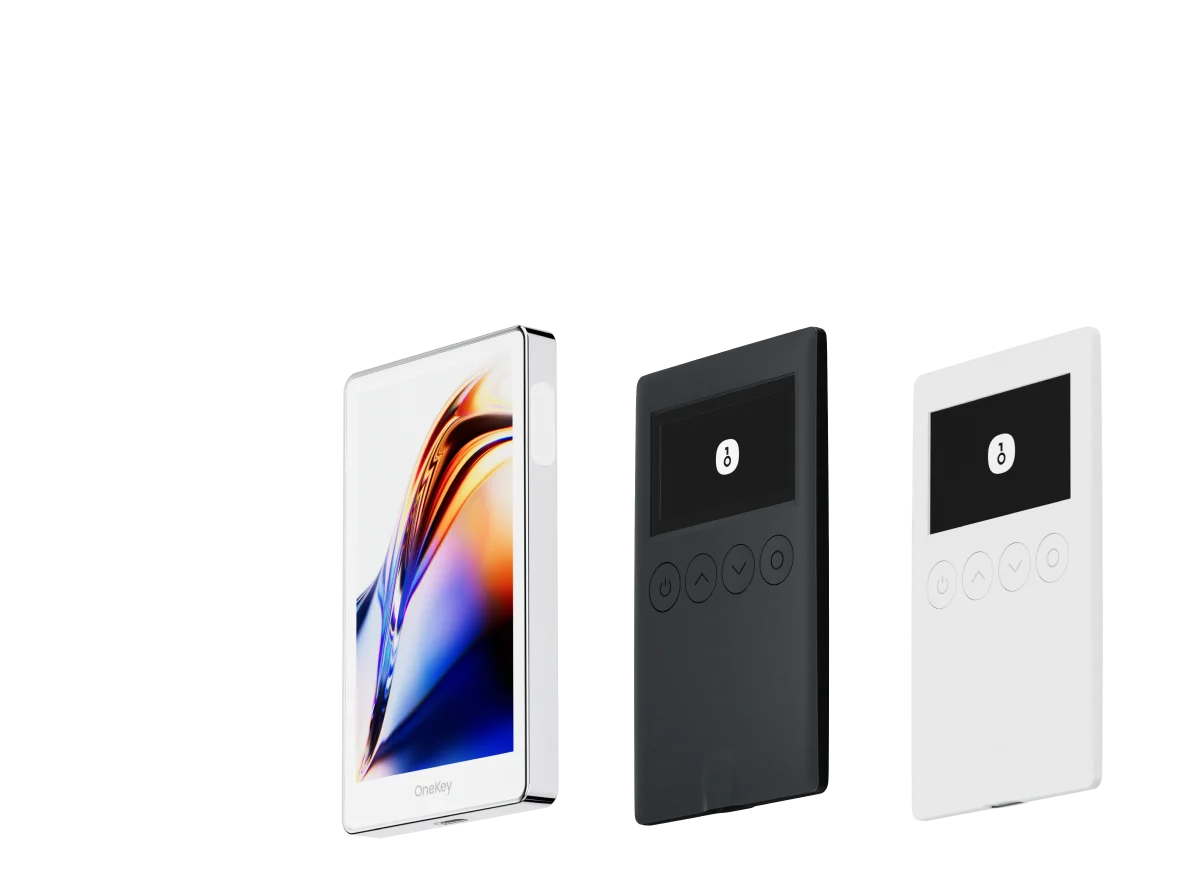
Self-Custody as a Regulatory Firewall: A Strategic View
As crypto regulation becomes more complex, users and institutions are taking a fresh look at the strategic value of self-custody. It is not just a way to store assets. Used properly, it can also act as a practical “regulatory firewall.” Source: OneKey GitHub.
This article explains how self-custody can help manage regulatory transmission risk, where its limits are, and how to build a more resilient workflow with OneKey Wallet and OneKey Perps.
Key comparison table
What Is a Regulatory Firewall?
In traditional finance, a “regulatory firewall” usually means separating business entities so that a regulatory issue in one entity does not automatically contaminate another.
In crypto, the logic is similar, but the object being separated is custody.
When you keep assets on a centralized exchange, you inherit that platform’s regulatory risk. If the exchange is investigated, withdrawals are paused, accounts are frozen, or the platform becomes insolvent, your access to assets can be directly affected.
Self-custody breaks that transmission path. Your keys control your on-chain assets. A third party’s regulatory issue does not automatically give that third party control over your wallet. This is one of the most important strategic benefits of self-custody.
Historical Pattern: Regulatory Risk Travels Through Centralized Custody
Over the past few years, several types of events have shown how centralized custody can transmit regulatory risk to users:
- Major crypto exchanges have faced regulatory investigations, with users sometimes seeing temporary withdrawal restrictions.
- Regulatory actions in different jurisdictions have led to account freezes at scale.
- Some platforms have suspended services under compliance pressure, leaving user assets stuck for months.
By contrast, users holding assets in self-custody wallets such as OneKey Wallet were able to continue accessing their on-chain assets, even when the platforms they previously used were under regulatory stress.
The point is not that self-custody removes all risk. It does not. The point is that it reduces dependence on any single custodian’s regulatory status.
Four Dimensions of the Self-Custody Firewall
1. Asset Availability
Self-custodied assets are not directly controlled by a third-party platform. As long as you control your private keys and the network is operating, you can move or use your assets.
That availability becomes especially important in uncertain regulatory environments, where platform-level restrictions can happen quickly.
2. Lower Centralized Compliance Risk
Keeping all assets in one exchange account creates a single point of compliance failure. If that platform faces restrictions, your entire balance may be affected.
A self-custody strategy lets you separate assets across wallets and use centralized platforms only when needed, for example for fiat on- and off-ramps. This reduces the amount of capital exposed to any one platform’s compliance issues.
3. More Flexibility at the Trading Layer
With a self-custody wallet, users can connect to on-chain protocols such as Hyperliquid, dYdX, and other decentralized trading venues. In that model, you interact with the protocol’s rules and smart contract logic rather than relying on a centralized platform’s custody and internal account system.
For perpetual futures users, OneKey Perps offers a practical workflow: trade through supported on-chain perps infrastructure while keeping the self-custody model at the center of your setup.
On-chain trading still carries market, liquidation, smart contract, and operational risks. But it can reduce the custody-related dependency on centralized exchanges.
4. More Control Over Personal Data
Blockchains are public ledgers, so self-custody is not the same as anonymity. However, self-custody does reduce the need to hand over sensitive documents such as passports, bank statements, and proof-of-address files to every platform you use.
In an environment where data breaches are common, minimizing where you submit personal information is a form of risk management. KYC data leaks can become a source of identity theft and targeted phishing against crypto users.
Limits of the Self-Custody Firewall
A self-custody firewall is useful, but it is not a magic shield. Its limits should be understood clearly:
- It does not remove your tax, sanctions, or reporting obligations.
- It does not protect you from losses caused by phishing, malware, seed phrase leaks, or signing malicious transactions.
- It does not eliminate smart contract risk when using DeFi or on-chain perps protocols.
- It does not prevent lawful government action if a court or regulator has authority over you.
- It does not make high-leverage trading safer. Perpetual futures can lead to rapid liquidation and total loss of margin.
The right way to think about self-custody is risk segmentation. It reduces certain third-party custody and regulatory transmission risks, while introducing private key management responsibilities.
How to Build an Effective Self-Custody Firewall
Step 1: Start With a Clean Self-Custody Base
Choose an audited, open-source wallet such as OneKey Wallet. OneKey’s code is open source, which allows the community to inspect how the wallet works.
A basic clean setup looks like this:
- Acquire crypto through compliant channels.
- Transfer assets to your self-custody wallet.
- Keep records of transfers and transaction history.
- Avoid mixing personal funds with unknown or high-risk addresses.
The goal is to move from platform custody to self-custody without creating unnecessary compliance or security problems.
Step 2: Separate Active Funds From Long-Term Savings
Do not use the same wallet for everything.
A practical structure is:
- Hot wallet: Smaller balances for daily activity, DeFi, and trading.
- Cold wallet: Long-term holdings stored with a hardware wallet.
OneKey hardware wallets provide physical isolation for private keys. Even if the computer you connect to is compromised, the private key is not exposed in the same way it would be in a browser-only or mobile-only wallet.
For larger balances, a hardware wallet should be considered part of the core firewall.
Step 3: Trade Through On-Chain Protocols Instead of Leaving Assets on Centralized Platforms
For users who trade perpetual futures, OneKey Perps provides a self-custody-friendly route to access on-chain perps markets.
The workflow is simple:
- Hold assets in your OneKey Wallet.
- Use OneKey Perps to connect to supported on-chain perps infrastructure.
- Trade without moving your long-term assets into a centralized exchange account.
- Keep only the amount needed for active trading exposed to perps risk.
This does not make perps low-risk. Leverage increases both gains and losses, and liquidation can happen quickly. The benefit is that your broader custody setup remains under your control.
Step 4: Keep Compliant On- and Off-Ramp Records
The weak point in many self-custody strategies is not the wallet. It is the fiat on- and off-ramp.
Use licensed and compliant exchanges where required, and keep complete records of:
- Deposits and withdrawals
- Exchange trades
- Wallet transfers
- Tax-relevant transactions
- Source-of-funds documentation where needed
A self-custody firewall works best when the surrounding recordkeeping is clean.
Step 5: Keep Security and Compliance Knowledge Updated
Both regulation and attack methods evolve constantly. Review your setup regularly.
Good habits include:
- Checking token approvals and revoking unnecessary permissions.
- Learning common phishing patterns.
- Reading security education from tools such as Revoke.cash.
- Following threat research from firms such as Chainalysis.
- Updating wallet firmware and software from official sources only.
Self-custody is not a one-time action. It is an operating discipline.
OneKey Wallet: The Core Tool for the Firewall
OneKey Wallet is designed to support a self-custody-first workflow.
- OneKey hardware wallets provide offline private key protection.
- OneKey software wallets make multi-chain access more convenient.
- OneKey Perps lets users access on-chain perpetual futures workflows without abandoning the self-custody model.
Just as important, OneKey does not custody user assets, does not hold user KYC data, and does not operate as a VASP custodian for user funds. That means a change in OneKey’s regulatory status does not directly transfer control of your on-chain assets to OneKey.
That is the firewall concept in practice: separate your assets from third-party custody risk wherever possible.
FAQ
Q1: Is self-custody the same as “avoiding regulation”?
No. Self-custody is a legitimate way to hold crypto assets and is protected in many major jurisdictions. It reduces the transmission of third-party regulatory risk. It does not remove your own legal obligations, such as tax reporting, sanctions compliance, or other applicable rules.
Q2: What are the advantages of a hardware wallet over a software wallet?
A hardware wallet stores private keys in an offline physical device. Even if the connected computer is infected with malware, the private key is not directly exposed.
For users holding meaningful amounts of crypto, a hardware wallet is usually the recommended foundation for a self-custody firewall.
Q3: Can a self-custody firewall protect me from OFAC sanctions risk?
No. Sanctions risk applies to people, entities, addresses, and transactions, not only to platforms. If you interact with sanctioned addresses, you may face legal risk whether you use a self-custody wallet or a centralized exchange.
Self-custody can reduce third-party platform risk. It does not change your own legal obligations.
Q4: Can self-custodied assets be seized by a government?
At the legal level, a government with proper authority may be able to require a person to disclose keys, transfer assets, or comply with a court order. Self-custody provides technical control, not legal immunity.
Q5: Is a self-custody firewall suitable for institutions?
It can be, but institutions have additional requirements, including internal custody policies, audit controls, approval workflows, and external regulatory obligations.
Institutional setups may require MPC wallets, multisig arrangements, segregated roles, and professional compliance advice. Institutions should consult qualified legal, tax, and compliance professionals before adopting any custody strategy.
Conclusion: A Firewall Is a Strategy, Not a Shield
The value of a self-custody firewall is that it systematically reduces regulatory transmission risk from third-party custodians. It does not remove all regulatory, security, or market risk.
Used correctly, OneKey Wallet and OneKey Perps give users a practical way to hold assets in self-custody, separate long-term funds from active trading capital, and access on-chain perps workflows without relying on centralized custody.
If that matches your risk profile, download OneKey from the official channel, set up a secure self-custody wallet, and use OneKey Perps with disciplined position sizing and clear risk limits.
Risk warning: This article is for informational purposes only and does not constitute legal, financial, tax, or investment advice. Self-custody involves private key management risk. Lost or exposed private keys can result in permanent loss of assets. Crypto assets and perpetual futures are high-risk and may result in the loss of all principal or margin. Assess your own risk tolerance and consult qualified professionals before making decisions.